

Goodwill Transforms Operations and Employee Productivity with AMI
With the help of Foresight Automation and RMH, MERS Goodwill was able to modernize its retail operations, significantly boosting efficiency and employee performance. The transition to serialized bar codes, enhanced reporting, and optimized labor distribution has transformed how MERS approaches its mission, allowing them to better serve their communities through increased revenue and operational excellence. As they continue to explore new features like Power BI analytics and customer loyalty programs, MERS Goodwill is well-positioned for future growth.
About the Customer
MERS Goodwill is a not-for-profit organization that has been serving communities for over 106 years. Operating within the broader Goodwill network, MERS utilizes thrift stores to support its mission of providing job training and employment placement services for individuals facing barriers to employment. With 42 traditional stores, 2 outlet stores, and an eCommerce department, MERS Goodwill is one of the more prominent branches of Goodwill Industries, which consists of 140 territories across the U.S. and Canada.
Before engaging with Foresight Automation and adopting RMH (Retail Management Hero) and AMI (Adaptive Merchandise Identifier), MERS was using a traditional POS system without a DGR (Donated Goods Retail) module. It was outdated and difficult to manage. Thrift-specific metrics were not available, and item tagging was inefficient, so it wasn't used. Cashiers manually entered sales data, leading to irregularities and slow checkout times. Store managers didn't have the necessary information to make critical decisions. This stifled employee productivity and limited their ability to grow. Revenue growth for the 3 years prior to deploying RMH/AMI was flat (-1%).
Challenges before RMH
Prior to adopting RMH/AMI, MERS Goodwill faced a number of operational challenges that affected both efficiency and profitability. Their existing technology, including electronic cash registers and NCR Counterpoint POS, struggled to keep up with the demands of a modern retail environment.
Key Challenges:
- Lack of Production to Sales Visibility: The MERS system did not capture the necessary data to provide insight into how production efforts translated into sales. Like most Goodwill agencies, MERS measured production using tally sheets (manually entered by the sorter making the items). Tally sheets only record the inputs (number of items made) and did not record whether items were sold or discarded. Thus, it is impossible to calculate sell through rate by item or sorter, which are among the most important Key Performance Indicators for thrift.
- Legacy Production Techniques Resulted in Unit Pricing: Recordkeeping in a manual production system is tedious and cumbersome. In order to increase efficiency, MERS did not tag donated clothing and used unit pricing (i.e., same-priced items regardless of desirability or condition). Cashiers were expected to memorize the price of each apparel item. Large signs were placed on top of each apparel rack to indicate the price. Changing prices was a big nuisance, so it was done infrequently and in large increments. This left little room for targeted pricing strategies or optimizing the value of individual donations.
- Outdated Technology and Lost Sales: Their POS system had numerous technical limitations. For example, credit card processing failed often, leading to lost sales. Additionally, much of the computing infrastructure was in the cloud, so Internet outages made the system useless. Lastly, manually entering line items and calculating discounts increased checkout times, leading customers to abandon their baskets during peak shopping hours. MERS needed a system that could reliably and efficiently process transactions while offering advanced management functionalities.
- Limited Reporting Capabilities: No traditional POS solution collects thrift-specific data. Without this data, it was impossible to provide the advanced reporting and analytics that management needed to make data-driven decisions. As a result, they were unable to tie item sales back to individual sorters, thus hindering their ability to maximize productivity or offer performance-based incentives. The sales data they did collect was too generic and did not provide meaningful options to improve sales.
Why RMH/AMI?
MERS Goodwill knew it wanted a different POS solution, but they were cautious about choosing the right solution. After evaluating several options, they ultimately chose RMH/AMI, implemented by Foresight Automation, because of the system’s flexibility and robust feature set. The key feature MERS needed was a serialized inventory with advanced bar codes to record thrift specific data. This would allow them to track each item from donation to sale, providing the transparency and accountability they had been lacking.
Key Decision Factors:
- Minimize Operational Changes: MERS Goodwill wanted a system that could accommodate their existing processes without requiring a major overhaul of their operations. RMH/AMI allowed them to keep their existing workflow and simply add a tagging step. This made the transition easier for the staff as well as management.
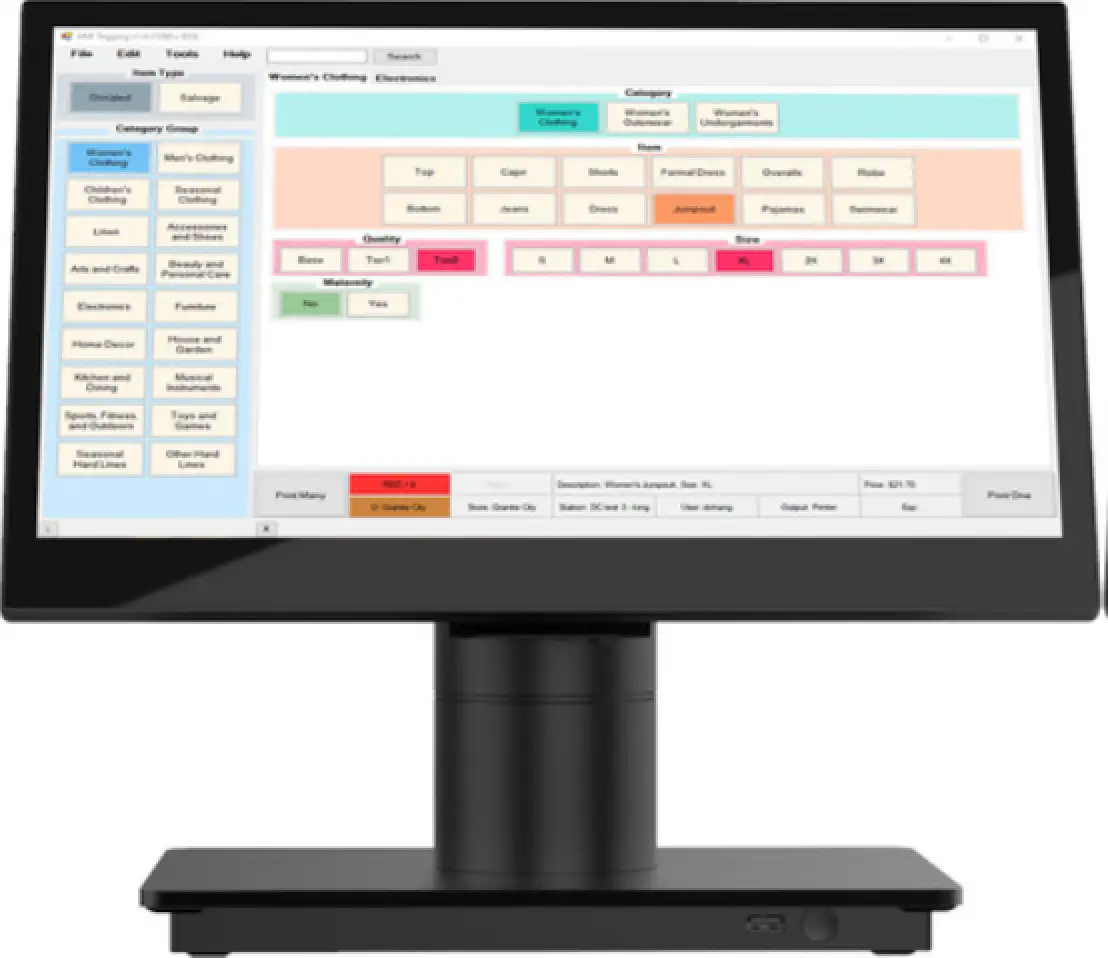
- Serialized Bar Codes for Greater Control: With AMI’s serialized production module, Goodwill can track individual items from donation through to the sale, allowing for better inventory management and insight into which items are selling and how sorters are performing.
- Comprehensive Reporting and Analytics: RMH/AMI offered the reporting tools MERS needed to not only track overall sales but also analyze individual employee performance, optimize pricing, and develop targeted training programs.
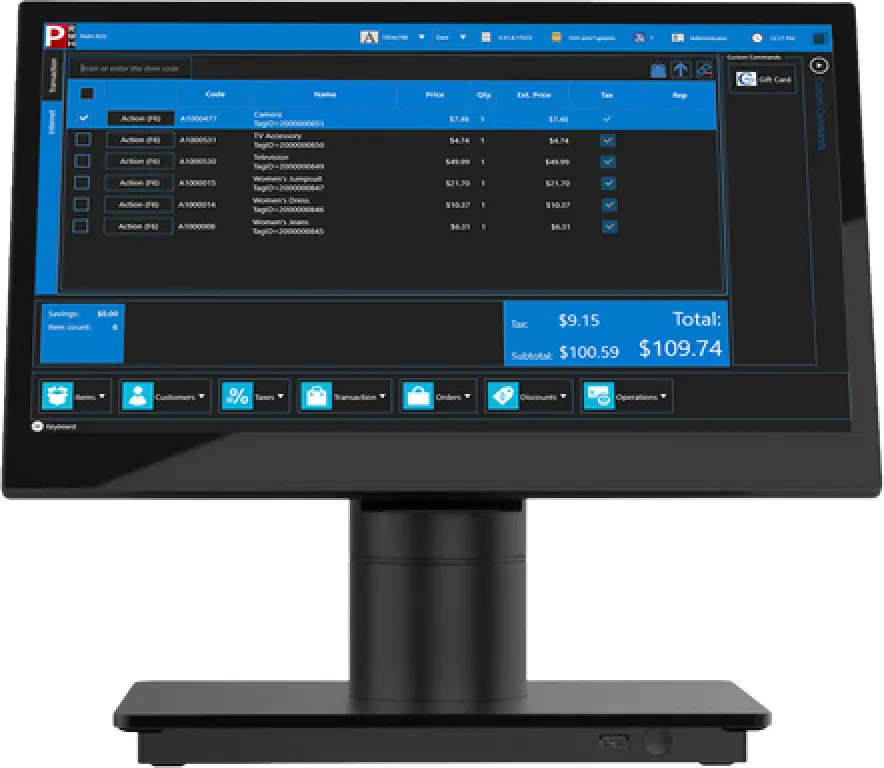
- Increased Efficiency for Cashiers: RMH was designed to streamline cashier workflows by using bar code scanning. This upgrade made the checkout process much faster and more efficient, freeing up cashiers to focus on value-added tasks rather than manual labor.
Implementation and Initial Challenges
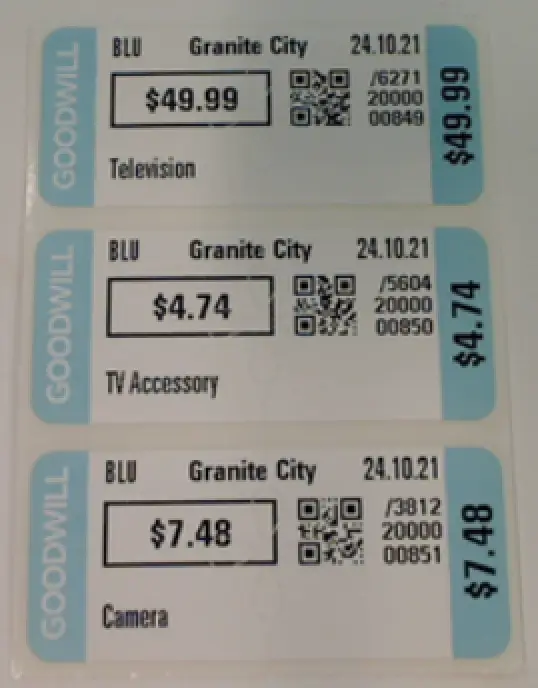
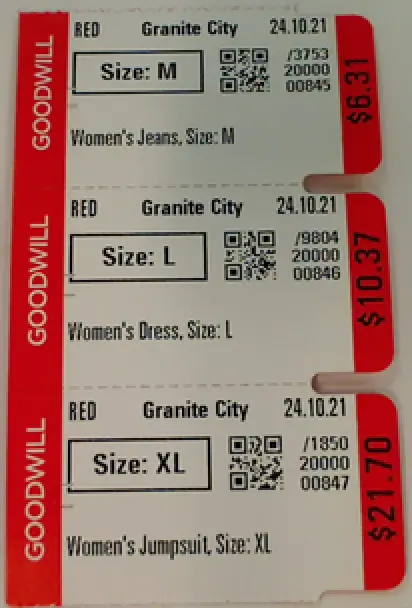
Although the implementation process was smooth, there were initial hurdles. MERS staff, especially in the production department, needed time to adjust to the new process and new technology of AMI. Creating bar-coded price tags increased item production time by 20%. However, that time was offset by the elimination of all manual recordkeeping.
Cashiers had a shorter learning curve as scanning tags using RMH was very intuitive, and most new job applicants were already familiar with the process versus manually entering line items. In addition, checkout times were significantly reduced so fewer cashier hours were needed. More workers were available to process donations.
At the end of the day, the number of items produced was the same as before. But, the value of the items produced increased due to smart pricing adjustments based on the data collected. The revenue gains from day one were clear evidence that this project would exceed its ROI goals.
Whatever hesitancy the leadership team had was short-lived. Once everybody understood how to efficiently use the system, the long-term benefits became apparent. The largest benefit of RMH/AMI is the visibility it provides. Decision-makers were not spending their time manually gathering data but rather analyzing the information they already had at their fingertips to make intelligent data-driven business decisions.
Key Implementation Insights:
- Transition to QR Codes: This change was crucial to improving workflow efficiency at the point of sale. While initially slowing production, the switch to QR code scanning proved to be a game-changer for cashier efficiency.
- Shift in Production Focus: MERS Goodwill shifted its focus from meeting arbitrary production quotas to concentrating on the quality of items produced. This shift enabled them to sell higher-value items faster, ultimately increasing revenue.
Results
After the initial transition, the benefits of RMH became clear:
- Improved Efficiency for Cashiers: The introduction of bar code scanning significantly reduced cashier workload. Employees no longer had to input as much manual data, making transactions smoother and more reliable. This improvement also allowed cashiers to focus on customer interaction, improving the overall customer experience.
- Better Inventory and Production Tracking: RMH/AMI provided a clear view of the inventory pipeline — from donation to sale. This transparency allowed MERS to focus on top-performing items and ensure they were getting maximum value from each donation. Management could now track individual item performance, which had not been possible under the old system.
- Increased Employee Productivity and Bonuses: The MERS leadership team believed that an incentive system could increase productivity, but it had to be objective and fair for each employee. With RMH/AMI, they were able to enhance their monthly bonus system based on individual employee performance. Top performers were identified, and their work habits could now be modeled to improve overall productivity across the organization.
- Enhanced Reporting Capabilities: RMH/AMI provides comprehensive reporting tools and the data necessary for strategic decision-making. Management can now pinpoint which employees were the most productive and which items had the highest sell-through rates, allowing for better inventory management and sales strategies. All data is easily accessible, so MERS built their own decision support applications and retail dashboards.
- Stronger Sales and Reduced Labor Costs: By optimizing labor distribution and focusing on high-value items, MERS Goodwill saw a significant improvement in sell-through rates, contributing to stronger financial performance. Retail sales increased from $68M to $98M in three years and the number of retail employees was reduced.
“RMH has been a transformative solution for us. The new system has not only improved productivity and reduced inefficiencies but also enabled us to gain insights we never had access to before. Our cashiers find the system easier to use, and the detailed reporting tools allow us to focus on specific items and employees that drive the most value. Foresight Automation has been a great partner in making this transition smooth and successful.”
— Mark Kahrs, Executive Vice President, MERS Goodwill
Future Outlook
MERS Goodwill plans to continue leveraging RMH/AMI to further improve its operations. They are particularly excited about integrating Microsoft Power BI for deeper data analytics, which will provide even more granular insights into their operations. Additionally, they are exploring adding a gift card and loyalty program to attract repeat customers and further increase revenue.
Future plans include:
Expansion into Data Analytics with Power BI: RMH’s ability to integrate with Power BI will give MERS Goodwill access to advanced reporting capabilities, allowing for even more informed decision-making.
Introduction of Gift Cards and Loyalty Programs: MERS aims to introduce a customer loyalty program to retain repeat customers and increase engagement.